Top 10 Pocket Filter Media Types You Need to Know?
In the world of HVAC and air filtration, the relevance of pocket filter media cannot be overstated. Data from the International Air Quality Association indicates that effective filtration can reduce airborne particles by up to 85%. Choosing the right pocket filter media is crucial for enhancing indoor air quality. This decision impacts not only health but also energy efficiency.
Many industries rely on pocket filters for their compact design and high efficiency. Reports show that these filters can capture particles as small as 0.3 microns. Yet, users often overlook the importance of filter selection. Not all pocket filter media types are equal. Their performance can vary dramatically based on application and environment.
Understanding the top ten pocket filter media types can help make better decisions. Consider factors such as dust holding capacity and airflow resistance. Neglecting these details might lead to inadequate air quality or increased energy costs. It's essential to reflect on the choices made in filtering systems. The right selection can lead to improved health outcomes and operational efficiency.
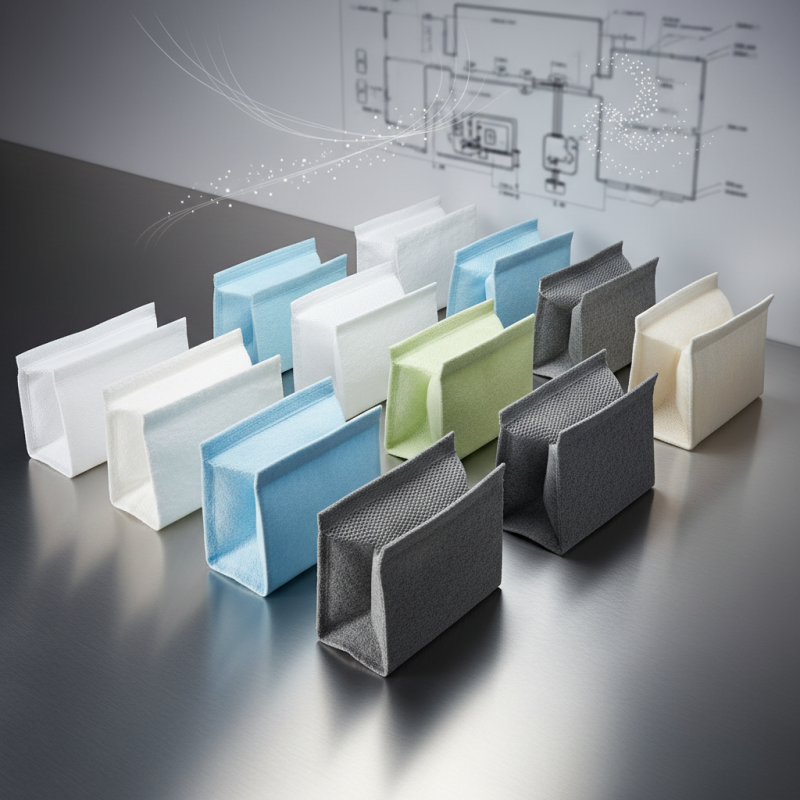
Types of Pocket Filter Media: An Overview
Pocket filter media play a crucial role in ensuring clean air in various environments. They trap impurities and particles effectively. There are different types available, each with unique properties. Synthetic fibers are common, known for their durability. They can handle high airflow yet maintain their filtration efficiency.
Another type is fiberglass media. It's highly effective for fine particulate capture. Many industries prefer this for its longevity and low pressure drop. However, fiberglass can be brittle, posing handling challenges. Some prefer woven or non-woven textiles, offering flexibility in applications. These fabrics can adapt to various filter designs.
Electrostatic media is also gaining popularity. It enhances particle capture through static electricity. This type is lightweight and efficient, yet it may lose effectiveness over time. Users should routinely check the performance.
Different pocket filter media are suited for specific environments, but making an informed choice requires research and consideration of individual needs. Understanding the nuances of each type is vital for optimal filtration performance.
Understanding the Functionality of Different Filter Media
Choosing the right pocket filter media is critical for effective air quality management. Different media types serve unique functions. For instance, synthetic fiber filters are excellent for capturing fine particles. They can achieve efficiencies greater than 95% for PM2.5 particles, according to industry research. This is significant for indoor environments, where air purity directly impacts health.
Meanwhile, fiberglass media has a lower resistance and higher dust-holding capacity. It can handle larger air volumes, making it suitable for HVAC applications. However, they may struggle with smaller particles. A recent study showed that while fiberglass filters are cost-effective, effectiveness drops noticeably after initial loading.
Electrostatic filters have gained popularity due to their ability to attract and trap dust without needing a high airflow rate. This technology can lead to up to 80% more particle capture. However, the reliance on static charge raises concerns about longevity. As filters age, their efficacy can decline. Understanding these nuances is vital in selecting the right filter for specific applications.
Top 10 Pocket Filter Media Types You Need to Know
| Filter Media Type | Material | Efficiency | Applications | Lifespan |
| Synthetic Fiber | Polyester | F6 | HVAC Systems | 6-12 months |
| Panel Filter | Glass Fiber | F7 | Commercial Kitchens | 9-15 months |
| HEPA Filter | Glass Fiber | H13 | Clean Rooms | 1-3 years |
| Activated Carbon Filter | Carbon | N/A | Odor Control | 6-12 months |
| Pocket Filter | Polyester | F5 | Industrial HVAC | 12-24 months |
| Pre-Filter | Synthetic | F5 | Residential HVAC | 3-6 months |
| Electrostatic Filter | Synthetic | F6 | Air Conditioning | 6-12 months |
| MERV Rated Filter | Fiberglass | MERV 8-13 | Residential and Commercial | 6-12 months |
| Washable Filter | Aluminum | F6 | Reusable HVAC | Up to 10 years |
Comparative Analysis of Pocket Filter Media Materials
When selecting pocket filter media, understanding the materials is crucial. Various types offer distinct advantages. Synthetic fibers are commonly used. They provide excellent filtration and are durable. However, they may not be biodegradable. On the other hand, natural fibers like cotton are eco-friendly. Yet, they can be less efficient in high-dust environments.
Another important material is fiberglass. It has a high dirt-holding capacity. However, it can be more expensive and less accessible. Some media are treated with chemicals. These help improve their filtration ability. However, potential side effects pose questions for health and safety. The effectiveness of each media type varies based on application. Specific needs must drive choices.
Some materials have a shorter lifespan. For example, coarse filters can clog more quickly. Regular maintenance is necessary to ensure optimal performance. Understanding these nuances is vital. A good choice balances efficiency and longevity. A poorly chosen filter can lead to increased costs and reduced air quality awareness. Thoughtful analysis of pocket filter media can significantly impact performance.
Applications and Industries Utilizing Pocket Filters
Pocket filters are essential in various industries. They serve critical roles in maintaining air quality and ensuring optimal operational efficiency. Hospitals rely on these filters to create sterile environments. In industrial settings, they capture dust and particulates, protecting machinery and improving product quality.
Data from the Clean Air Council shows that effective filtration can reduce airborne pollutants by up to 99%. This statistic highlights why industries invest in pocket filters. In commercial buildings, these filters enhance HVAC systems, leading to lower energy costs. The integration of advanced filter media also boosts the lifespan of HVAC systems.
However, there's room for improvement when it comes to filter maintenance. Many users overlook regular checks, leading to inefficiencies. A study by the American Society of Heating, Refrigerating, and Air-Conditioning Engineers revealed that 30% of HVAC failures can be traced back to neglected filters. This data underlines the importance of routine filter inspections.
Maintenance and Performance Considerations for Filter Media
Maintaining filter media is crucial for optimal performance. Regular checks can prevent clogging. Clogged filters reduce airflow and increase energy costs. Inspect filters every month. Look for dust and dirt build-up. Sometimes, filters may not be completely clean even after washing.
Choosing the right materials matters too. Various types of pocket filter media vary in efficiency and lifespan. Some materials resist moisture better. Others are designed for higher dust-holding capacity. It's essential to understand these characteristics. Selecting the right media improves overall system efficiency.
However, user mistakes can happen. Many forget to replace filters regularly. This leads to performance issues. Tracking filter changes on a calendar can help. A proactive approach reduces headaches later. Keeping a clean system is a never-ending task, but it pays off.
Top 10 Pocket Filter Media Types Performance Comparison
This chart illustrates the performance efficiency of various pocket filter media types based on their filtration efficiency percentage and airflow resistance in Pascal (Pa).