
- Home
- >
- Knowledge Center
- >
- Blogs
Blogs
Sharing knowledge is key to an innovative and healthy industry! This knowledge center is therefore a central place on our website to share information. Read all about our industry in the blogs below!
What is a Gate Valve and How Does it Work?
A Gate Valve is a crucial component in various piping systems. It helps control the flow of liquids and gases. As noted by industry expert John Smith, "A gate valve is designed for on/off control, not throttling." This highlights the primary function of a gate valve in managing flow efficiently.
Understanding how a gate valve operates can be quite enlightening. Typically, these valves consist of a wedge-shaped gate that moves up and down to open or close the flow path. However, users often forget about maintenance. Neglect can lead to leaks or failures over time. In many cases, users only notice problems when it’s too late.
It’s important to recognize the limitations of gate valves. They perform best in fully opened or closed positions. Often, they are not suitable for regulating flow. This misunderstanding can lead to operational issues. Users should reflect on their needs before selecting a valve. Gate valves are effective, yet their application must be carefully considered.
What is a Gate Valve?
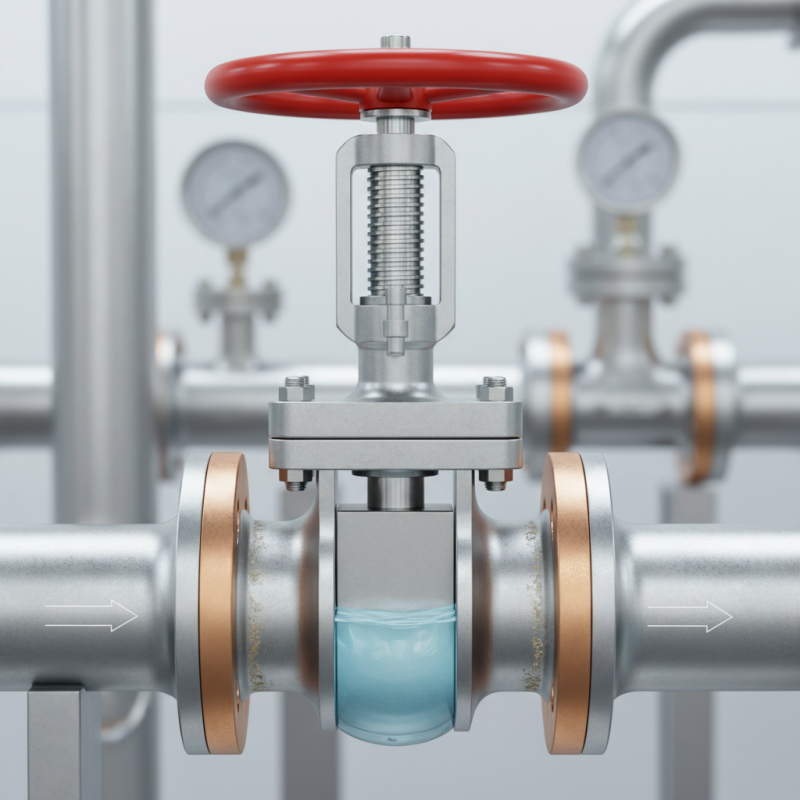
A gate valve is a crucial component in fluid control systems. It is primarily used to stop or start the flow of liquids or gases. The design features a gate that moves up and down. When the gate is fully raised, the flow is unrestricted. When lowered, the flow stops completely. This simple mechanism allows for effective isolation.
Gate valves are often chosen for their reliability. They offer minimal resistance during operation, which is beneficial in many applications. However, they are not ideal for regulating flow. When partially open, they can cause turbulence and wear. This can lead to inefficiencies over time. It's essential to consider this limitation before installation.
In practice, maintenance is key for gate valves. Regular inspections are needed to ensure they function correctly. Corrosion and sediment buildup can affect their performance. Users may find that they need to replace components sooner than expected. Understanding these factors is vital for optimal use.

The Structure and Components of a Gate Valve
Gate valves are crucial components in various piping systems. They help control the flow of liquids and gases. The basic structure of a gate valve consists of several key parts. The body forms its outer shell, housing the internal components.
Inside, there is a gate or disc that moves up and down. This movement allows or blocks fluid passage. The sealing surfaces on the gate and the valve body must be precise. Otherwise, leaks may occur. A robust actuator is necessary to engage the gate. It can be manual or automated, depending on the application's needs.
A drawback is that gate valves are not ideal for throttling. They perform best in fully open or fully closed states. Another point to consider is wear over time. Regular maintenance is essential to ensure longevity. These factors are vital when selecting a valve for a specific application.
How Gate Valves Function Mechanically
Gate valves are crucial components in various fluid control systems. They allow or block the flow of liquids or gases. Understanding how these valves function mechanically reveals their importance in many industries.
Gate valves operate through a simple yet effective mechanism. A gate, typically a flat piece of metal, slides up and down within the valve body. When the gate is lifted, flow is allowed. Conversely, lowering the gate blocks the flow completely. This straightforward design makes gate valves reliable for on/off control. However, they are not ideal for throttling. When partially open, they can create turbulence, leading to inefficiencies.
The operation can sometimes seem deceptively simple. Users may overlook maintenance needs, leading to performance issues. For instance, debris can accumulate in the valve body. This accumulation can hinder the gate's movement and cause leaks. Regular inspections and cleaning are essential. Ensuring smooth operation can be challenging but rewarding. Understanding the mechanics of gate valves is key for optimal function.
Applications of Gate Valves in Various Industries
Gate valves play a crucial role in various industries. They are widely used in water supply and wastewater treatment plants. According to a market report, the global gate valve market will reach USD 11 billion by 2026. This growth indicates a strong demand across essential sectors.
In oil and gas applications, gate valves are essential for controlling flow. They effectively handle high-pressure systems. In fact, a recent report stated that around 35% of all industrial valves used in this sector are gate valves. Their ability to provide a tight seal makes them ideal for maintaining pipeline integrity.
Tips: Regular maintenance is vital. Check for leaks and corrosion. Inspect the valve's operational status periodically. Small issues can lead to bigger problems. Ensure you're using the correct size for your application. Oversized valves can lead to inefficiencies.
Chemical processing also relies on gate valves. Here, material compatibility is crucial. A mismatch can lead to severe consequences. Data from industry studies reveal that poorly selected valves have caused significant operating errors. Always conduct thorough research before installation.
Advantages and Disadvantages of Using Gate Valves
Gate valves are commonly used to control the flow of liquids and gases. They are designed to be fully opened or closed. This simplicity is one of their main advantages. When fully open, they provide a straight path for the flow. This minimizes pressure loss and turbulence.
However, gate valves also have drawbacks. They are not suitable for throttling purposes. Using them in partially open positions can lead to damage. Also, they may require more space to operate properly. Maintenance can be more complex than with other types of valves. Sometimes, internal parts can wear out or corrode, requiring replacements.
In some cases, operators may overlook these issues. They might focus too much on the immediate benefits. It is crucial to weigh all factors before using gate valves. Understanding both advantages and disadvantages is essential for effective decision-making.