
- Home
- >
- Knowledge Center
- >
- Blogs
Blogs
Sharing knowledge is key to an innovative and healthy industry! This knowledge center is therefore a central place on our website to share information. Read all about our industry in the blogs below!
How to Choose the Best Strong Base Anion Resin for Your Needs?
The selection of a strong base anion resin is crucial in various applications, such as water treatment and chemical processing. The global market for anion exchange resins is projected to reach $2.7 billion by 2026, highlighting their importance in industries. Choosing the right resin can influence efficiency, cost, and performance.
strong base anion resins are designed for specific conditions like pH and temperature. Factors such as ion exchange capacity, physical stability, and operational conditions also matter. Reports show that about 30% of users face challenges finding the right resin. This often leads to inefficiencies and unexpected expenses in processes.
Many professionals overlook these details, which can lead to suboptimal results. Evaluating the required specifications is essential. A resin that works well for one application might fail in another. It's vital to re-evaluate the operational needs and select accordingly. Making informed choices can significantly enhance results and reduce complications.
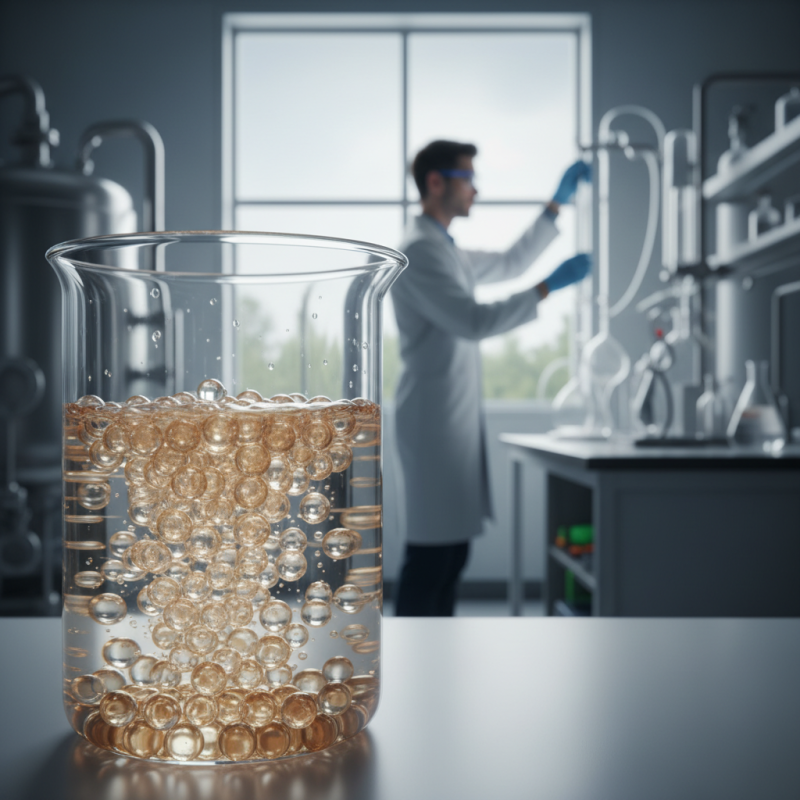
Understanding Strong Base Anion Resins and Their Applications
Strong base anion resins are crucial in water treatment and chemical processes. They effectively remove anions like chloride and sulfate from water. This makes them essential for industries such as pharmaceuticals and food processing. The choice of resin impacts the efficiency of these processes.
In applications, different types of strong base anion resins serve unique purposes. For instance, some are designed for high selectivity. Others may work better in varied pH levels. This variability can lead to confusion. Not all resins perform equally under the same conditions. Testing under actual operating conditions is often necessary.
The wrong choice can lead to inefficiency. It may waste resources and time. It's vital to consider specific needs. The properties of the resin, such as capacity and regeneration cycles, are key factors. Understanding these aspects can help in making an informed decision. However, it is also important to remain open to learning from past experiences. Adjustments may be required based on actual outcomes.

Strong Base Anion Resin Applications
This bar chart illustrates the frequency of various applications of strong base anion resins. As shown, water treatment is the most common application, followed by wastewater treatment and food & beverage industries. This data highlights the versatility and importance of these resins in different sectors.
Key Characteristics to Consider When Selecting a Strong Base Anion Resin
Choosing the right strong base anion resin is critical. There are several key characteristics to consider. First, consider the resin's capacity. A higher capacity means it can hold more ions, thus improving efficiency. Next, look at the operating pH range. Some resins work well only under specific conditions. Understanding your process needs is vital.
Another important factor is the physical structure of the resin. A well-structured resin can enhance performance. Factors such as bead size and uniformity play a role. However, finding the right balance can be tricky. Too fine may cause clogging, while larger beads can navigate flow better.
Regeneration ability is also essential. The frequency and ease of regeneration can affect operational costs. Consider how often the resin should be refreshed and its longevity. It's crucial to choose a resin that meets both technical and economic requirements. Ultimately, make a decision that aligns with your specific application demands.
Types of Strong Base Anion Resins and Their Unique Properties
Choosing the right strong base anion resin requires an understanding of the different types available. There are several categories, each with unique properties. For instance, Type I resins are ideal for deionization processes. They operate well at higher pH levels, typically around 12 or above. Type II resins, on the other hand, show stability in a broader pH range and are often used in more varied applications.
Recent industry reports indicate that Type I resins account for about 60% of the market share due to their efficiency in producing high-purity water. However, Type II resins are gaining traction, especially in industries where pH levels fluctuate. For groundwater applications, these resins can be surprisingly effective.
Tip: Always consider the specific application before making a decision. Evaluate the operational conditions and the water chemistry involved. Sometimes, blending resins can yield better results. Additionally, it’s crucial to analyze the lifecycle and cost of replacement, as not all resins offer the same durability or stability. Maintaining resin performance might require regular monitoring, which can prove challenging for operators.
Evaluating Performance Metrics for Strong Base Anion Resins
When evaluating strong base anion resins, consider several key performance metrics. Ion exchange capacity is crucial. This metric indicates how many ions the resin can exchange, influencing its efficiency. High capacity solutions often yield better results in applications like water treatment. But not all high-capacity resins perform well. Look into their selectivity for specific ions too.
Another important factor is physical stability. Resins can degrade over time if conditions aren’t optimal. Pay attention to temperature ranges and pH stability. A resin might perform well initially but lose effectiveness as it ages. Sometimes, real-world tests provide clearer insights than lab results.
Consider the kinetics of ion exchange as well. Some resins perform quickly, while others take more time. Fast-acting resins can be valuable but might sacrifice some selectivity. Finding the right balance can be challenging. This is where understanding your specific application matters most. Exploring resin interactions with particular solutions is often enlightening.
Factors Influencing the Lifespan and Efficiency of Anion Resins
When selecting a strong base anion resin, the longevity and performance of the resin are crucial. Various factors contribute to their lifespan. One major factor is the type of water being treated. Water with high levels of organic matter or fouling agents can deteriorate resin efficiency. According to a recent industry study, resins exposed to these conditions can lose up to 30% of their efficiency within just six months.
Temperature also plays a significant role. High temperatures can accelerate degradation. Research indicates that for every 10°C increase, the lifespan of anion resins may drop by 50%. Regular monitoring of operating conditions is essential. Yet, many users overlook this, risking premature failure of their systems.
Furthermore, the presence of competing ions can affect performance. For instance, sulfate and chloride ions can block active sites on the resin. This can lead to reduced capacity and increased regeneration frequencies. Surveys show that around 25% of users do not account for the ionic composition of their feed water, leading to unexpected costs and inefficiencies. Understanding these nuances is vital to ensure optimal resin selection.